

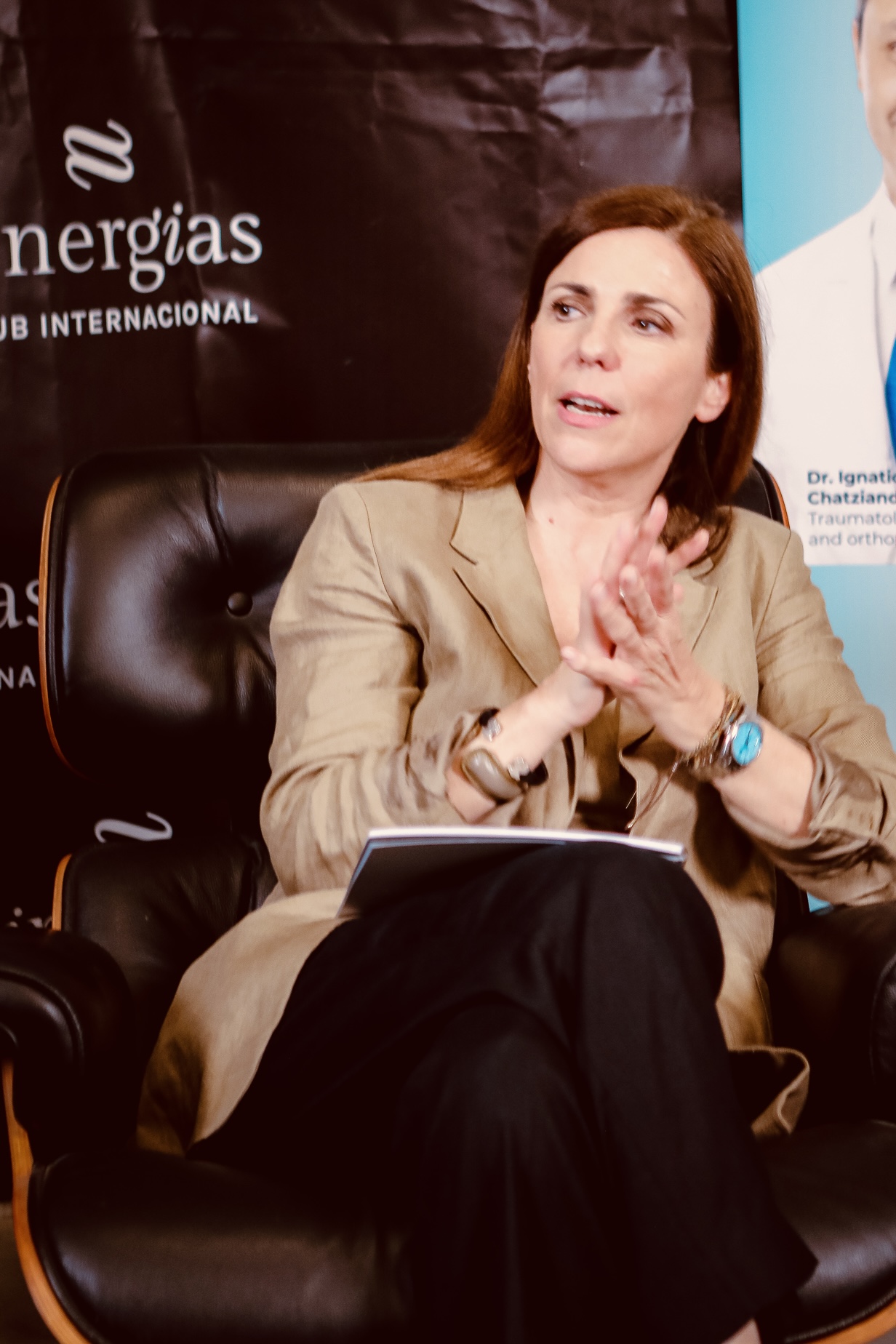
By Elsa Ibáñez Ferrer, Editor-in-Chief of Spanien Press / Spain Expat Press & Responsible International Department Sinergias
There are stories that go far beyond sport. For me, the possibility that the 2030 FIFA World Cup final could be played in Casablanca is one of them.
This morning, the Spanish press woke up to headlines dominated by that very possibility. Although FIFA insists that no final decision has been made, the reports alone have sparked surprise, disbelief and, in many quarters, outright anger across Spain.
But I do not believe this debate is really about football.
A World Cup is no longer just a sporting event. It represents international prestige, economic opportunity, investment and global influence. Hosting the final is about far more than ninety minutes on the pitch; it is a showcase of a nation’s standing in the world.
That is why the real question is not simply where the final will be played, but what such a decision would symbolise.
When Spain, Portugal and Morocco presented their joint bid, it was celebrated as a bridge between Europe and Africa. It was meant to demonstrate that sport could unite continents and strengthen cooperation.
Much has changed since then.
The recent crisis in Ceuta has altered the way many Spaniards view Morocco. Whatever one’s political interpretation of those events, it is clear that confidence between the two countries has been affected. Morocco continues to maintain its long-standing claims over Ceuta and Melilla, while Spain considers both cities an integral part of its national territory. That underlying dispute has never disappeared and inevitably forms part of the wider discussion about relations between the two neighbours.
Against that backdrop, many Spaniards find it difficult to understand why the tournament’s showpiece match could end up being staged in Morocco.
There is, however, another aspect that I believe deserves far more attention.
Foreign policy has consequences.
The government of Pedro Sánchez continues to pursue a foreign policy that remains the subject of intense debate both within Spain and internationally. Spain’s position on Israel has led to significant diplomatic tensions. Likewise, the political disagreements between Pedro Sánchez and Donald Trump have long been well known. At the same time, Morocco has steadily strengthened its strategic ties with both the United States and Israel, particularly in the fields of defence, security and technology.
Does that automatically mean there is a direct connection between these developments and the debate over the World Cup final?
No.
There is no publicly available evidence to support such a conclusion, and serious journalism should never present speculation as fact.
What I do believe is that it is reasonable to ask whether foreign policy can, over time, influence a country’s international standing. Diplomacy does not end when a summit concludes. It shapes trust, alliances and the way nations are perceived for years to come.
We live in a world where sport, economics and geopolitics are becoming increasingly intertwined. To assume that a World Cup exists entirely outside that reality seems, at the very least, open to question.
There is another element that should not be overlooked. FIFA continues to carry the legacy of past corruption scandals that severely damaged its credibility. Although the organisation says it has introduced significant reforms, major decisions are still scrutinised with understandable scepticism.
Whether these developments are actually connected is something nobody can say with certainty today. Yet it would be equally naïve to believe that sport, diplomacy and international politics operate in completely separate spheres in 2026. A World Cup is no longer just a football tournament; it is also a statement of influence, prestige and international visibility.
Perhaps, then, the debate is not really about whether the final should be played in Casablanca or Madrid.
Perhaps it is about something far more fundamental: whether Spain is successfully defending its position in a rapidly changing geopolitical landscape.
As a journalist, I do not claim to have all the answers. But I do believe it is our responsibility to ask the questions that an increasing number of people are beginning to ask. Major international decisions are rarely driven by a single factor. More often, they emerge from a complex combination of political, economic, strategic and diplomatic interests.
Perhaps, years from now, we will conclude that none of these events were connected.
Or perhaps we will realise that geopolitics had been playing its own match all along while the rest of us believed we were simply talking about football.
Because World Cups may be decided on the pitch, but their greatest political significance is often shaped far beyond the stadium.